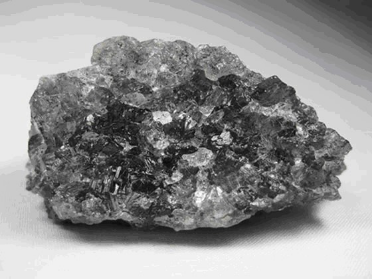
Sedimentary rocks make up about 75% of all rocks exposed on the Earth’s surface. They also are the result of change, but they form at or near the Earth’s surface, which makes them very different than metamorphic rocks. Wind, water, and ice constantly wear away and weather the rocks, producing smaller pieces called sediment. The terms gravel, sand, silt, and clay are used to describe some of the different-sized pieces of sediment. As water flows downhill, it carries the sedimentary grains into lakes and the ocean, where they get deposited. As the loose sediment piles up, the grains eventually get compacted or cemented back together again. The result is new sedimentary rock. Sandstone, conglomerate, and shale are sedimentary rocks that have formed this way.
Sedimentary rocks are formed by the accumulation of sediments. There are three basic types of sedimentary rocks: 1) clastic sedimentary rocks such as breccia, conglomerate, sandstone and shale, that are formed from weathering debris; 2) chemical sedimentary rocks such as rock salt and some limestones, that form when dissolved materials precipitate from solution; and, 3) organic sedimentary rocks such as coal and some limestones which form from the accumulation of plant or animal skeletal debris.
Sandstone is a clastic sedimentary rock made up mainly of sand-size (1/16 to 2 millimeter diameter) weathering debris. Environments where large amounts of sand can accumulate include beaches, deserts, flood plains and deltas.
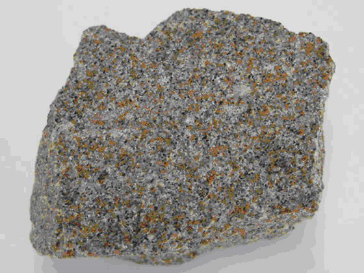
Conglomerate is a clastic sedimentary rock that contains large (greater than two millimeters in diameter) rounded particles. The space between the pebbles is generally filled with smaller particles and/or a chemical cement that binds the rock together.
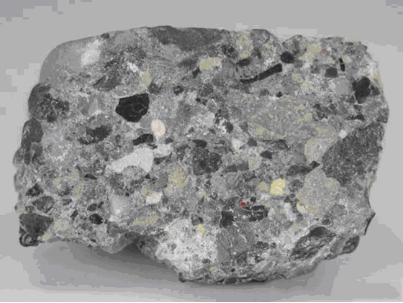
Limestone is a rock that is composed primarily of calcium carbonate. It can form organically from the accumulation of shell, coral, algal and fecal debris. It can also form chemically from the precipitation of calcium carbonate from ground, lake or ocean water. Limestone is used in many ways. Some of the most common are: production of cement, crushed stone and acid neutralization.
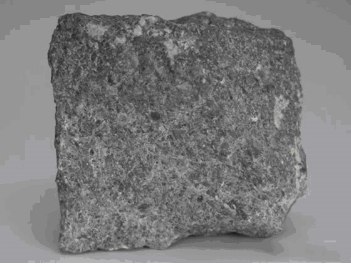
Rock Salt is a chemical sedimentary rock that forms from the evaporation of ocean or saline lake waters. It is also known by the mineral name "halite". It is rarely found at Earth’s surface, except in areas of very arid climate. It is often mined for use in the chemical industry or for use as a winter highway treatment. Some halite is processed for use as a seasoning for food.