
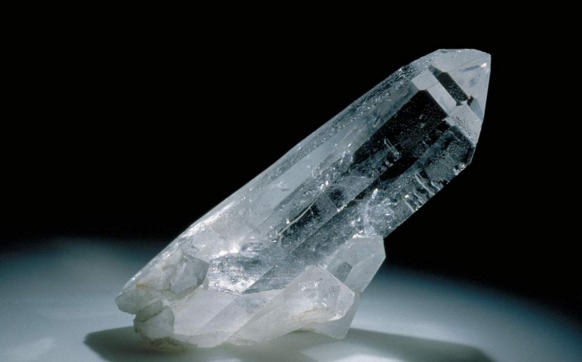
Quartz is one of the most common, widely distributed, and important rock-forming minerals in nature. Its primary chemical composition is silicon dioxide (SiO₂), featuring stable chemical properties and a well-ordered crystal structure (trigonal system).
Pure quartz is colorless and transparent with a glass-like luster; when trace impurities or mineral inclusions are present, it exhibits various hues including white, pink, purple, yellow, and smoky gray, forming attractive mineral varieties such as amethyst, citrine, smoky quartz, and rose quartz. Quartz encompasses a rich diversity of varieties, many of which are classified as semi-precious gemstones. Since ancient times, quartz minerals have been extensively crafted into jewelry, ornaments, and carved artifacts, with a long-standing tradition of use across major ancient civilizations worldwide.
Quartz is relatively hard and cannot be scratched by an ordinary knife; it displays a characteristic conchoidal fracture and is the most ubiquitous rock-forming mineral in rocks, soils, and sands.
Quartz has remarkably broad applications: it serves as an important industrial raw material for producing glass, ceramics, and optical devices; it is fabricated into critical timing and signal transmission components in mobile phones and computers (quartz crystal oscillators); and it is also an essential source material for preparing high-purity silicon used in semiconductor chips. Additionally, quartz is an important subject for geological research and popular science education, being widely found in geoparks and the vast majority of common rock types.
 |
 |

