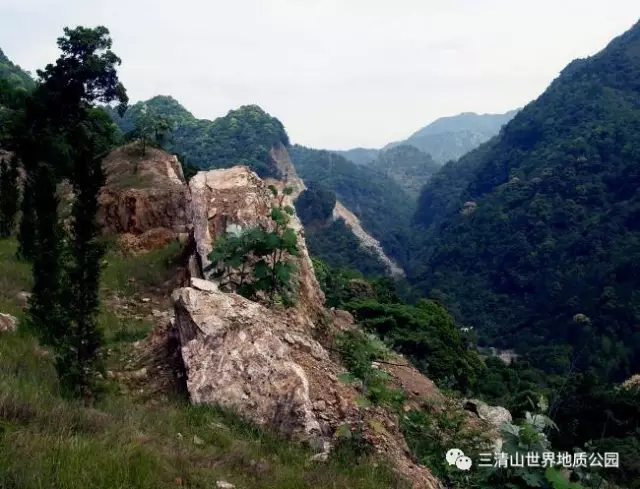
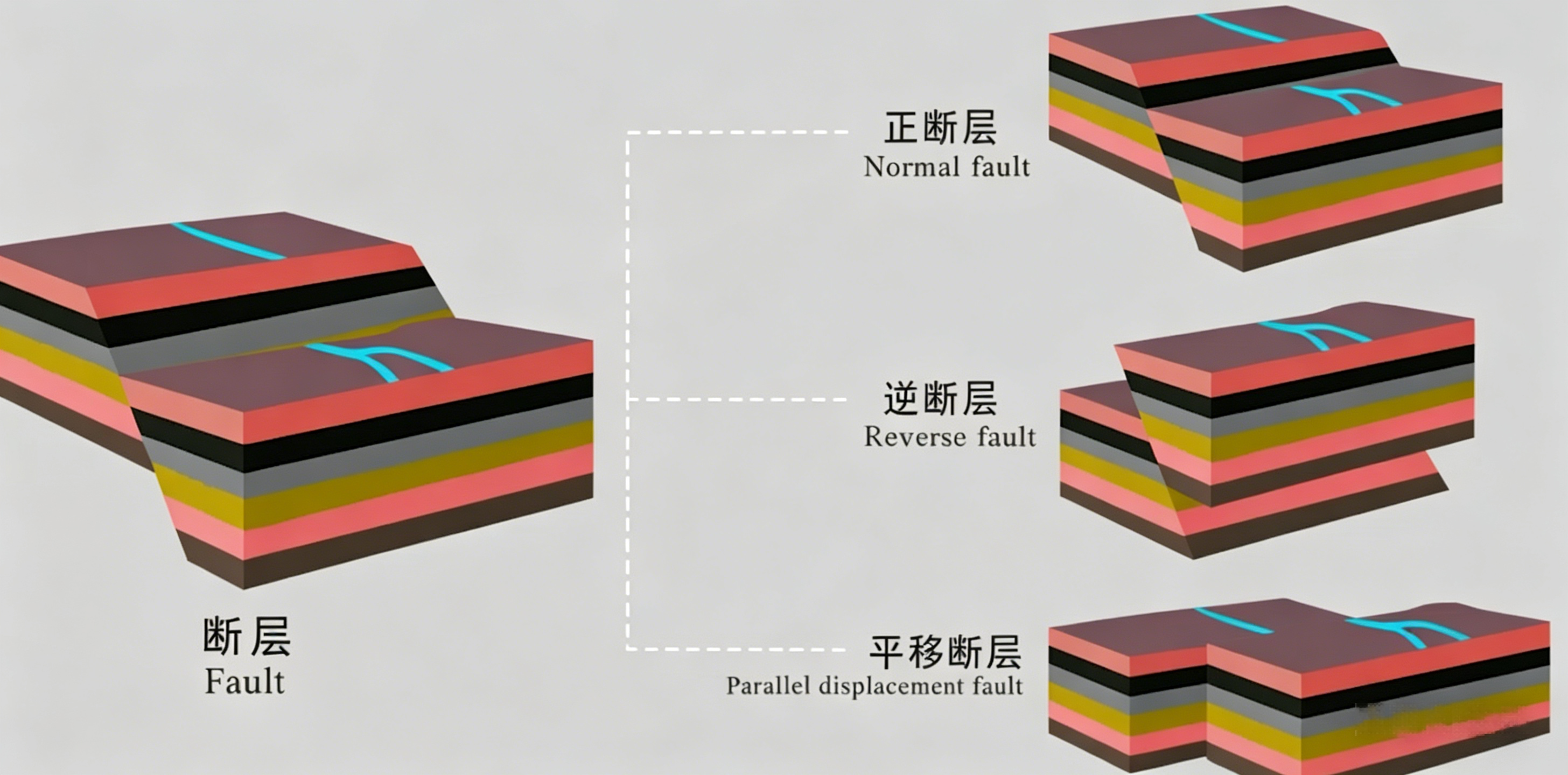
A fault is a fracture in the Earth's crust along which the rocks on either side have undergone significant relative displacement. Large-scale fracture structures are also commonly referred to as fractures or fault zones.
The fault plane is the surface of rupture along which the rocks on both sides have moved relative to each other. The rock block above the fault plane is called the hanging wall, while the rock block below the fault plane is called the footwall.
Based on the relative movement direction of the hanging wall and footwall, faults are classified into three main types:
Normal fault: the hanging wall moves downward relative to the footwall
Reverse fault (or thrust fault): the hanging wall moves upward relative to the footwall
Strike-slip fault (or wrench fault): characterized by predominantly horizontal displacement with little to no vertical movement.