Geological processes are processes caused by continuous changes and formation of crustal components, crustal structures and landforms due to nature forces. Geological processes can be divided into endogenic processes and exogenic processes.
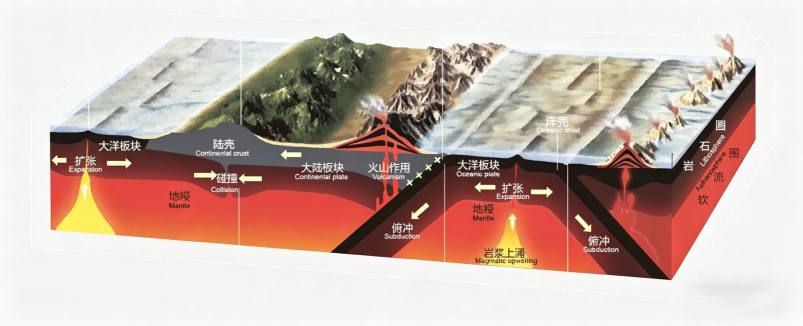
Endogenic processes refer to processes caused by the energy generated by rotation of the Earth, gravity, and decay of radioactive elements. Convection concurring in mantic can tear down plates in lithosphere, leading to volcanoes, earthquakes, and plate movement.
I. Tectogenesis
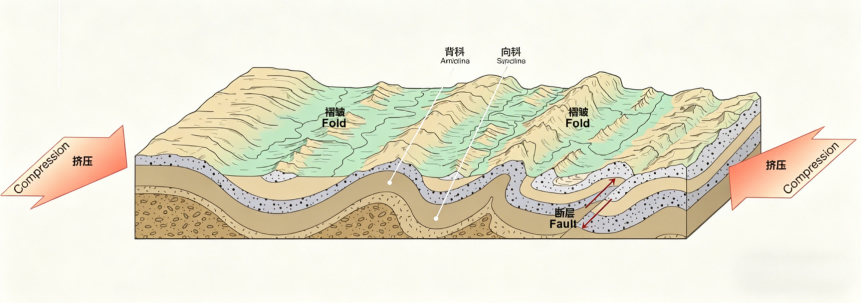
Endogenic geological process can cause mechanical movement in lithosphere geological body such as deformation and displacement. Tectogenesis is the displacement and deformation of the Earth's crust even in lithosphere caused by endogenic geological process,the mechanical actions such as proliferation and extinction of the ocean floor, accompanying seismic activities, magmatic activities and metamorphism. It can produce various geological structures such as folds and fractures, cause changes in contours of both ocean and land, uplift and depress Earth's crust, and form mountains and trenches. Tectogenesis plays an important role in the evolution of Earth's crust.
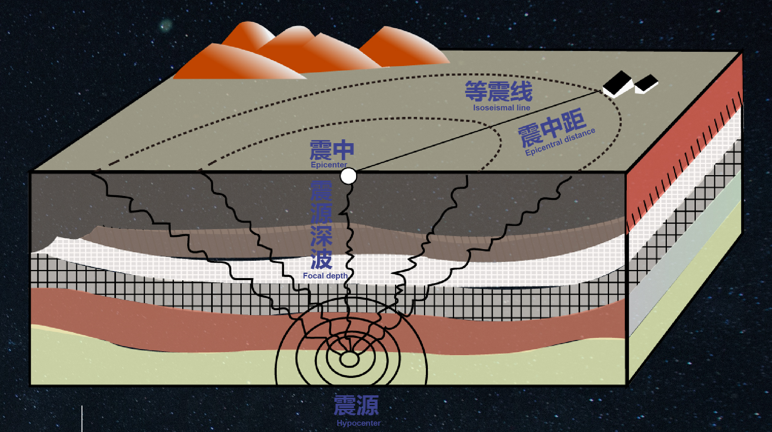
Seismism refers to structural dynamic effects caused by ground motion, which is divided into horizontal earthquake action and vertical earthquake action.
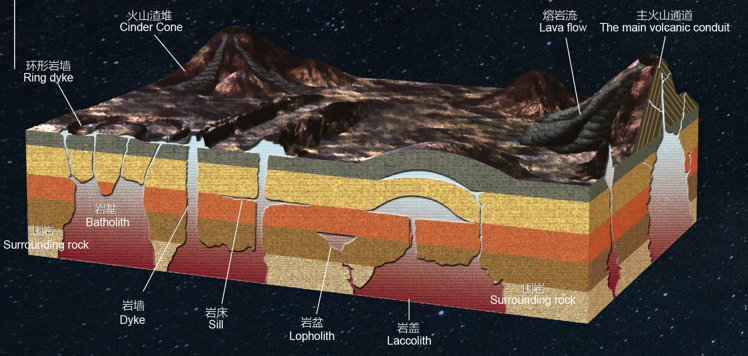
Magmatic action refers to the entire geological process of the occurence, development, and evolution of high-temperature molten magma in the deep crust (to top of the uppermost mantle) until it is cooled into rock. The magma deep in the Earth's crust has high temperature and pressure. When crust breaks due to tectogenesis, local crust pressure may decrease, resulting in magma's migration to region with lower pressure and occupying a certain space or erupting out of the surface.
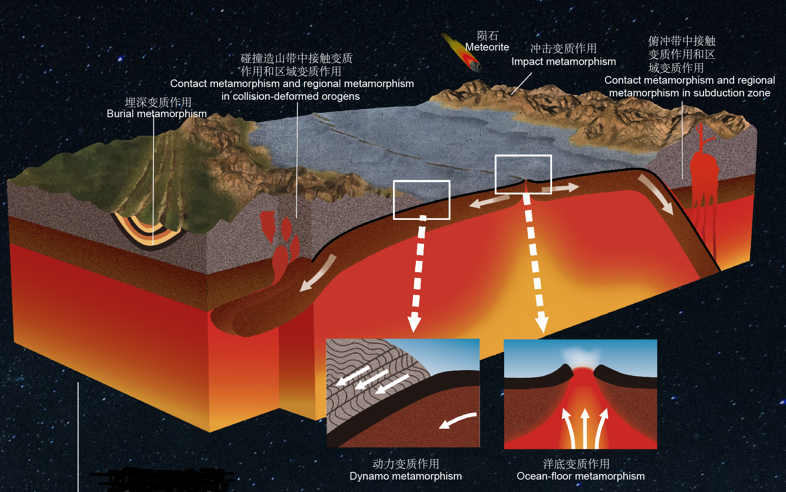
In most cases, Metamorphism is closely related to the changes in heat flow, tectonic stress, or load pressure within Earth during the evolution of crust, and a few are generated by meteorite's impact on surface rocks of the Moon and the Earth. Metamorphism occurs when the rock remains substantially solid.