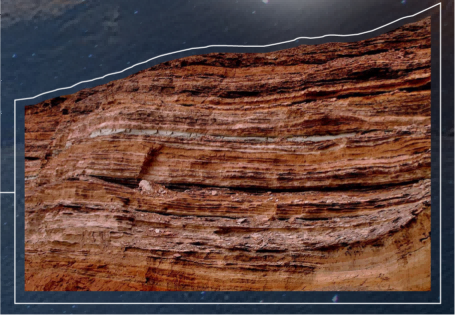
Exogenic geological process refers to the geological process taking solar radiant energy and sun and moon gravitational energy as energy, and caused by the atmospheric, wind, water, biological and other factors.
Exogenic geological process includes weathering, denudation, transportation, sedimentation, consolidation diagenesis, and so on.
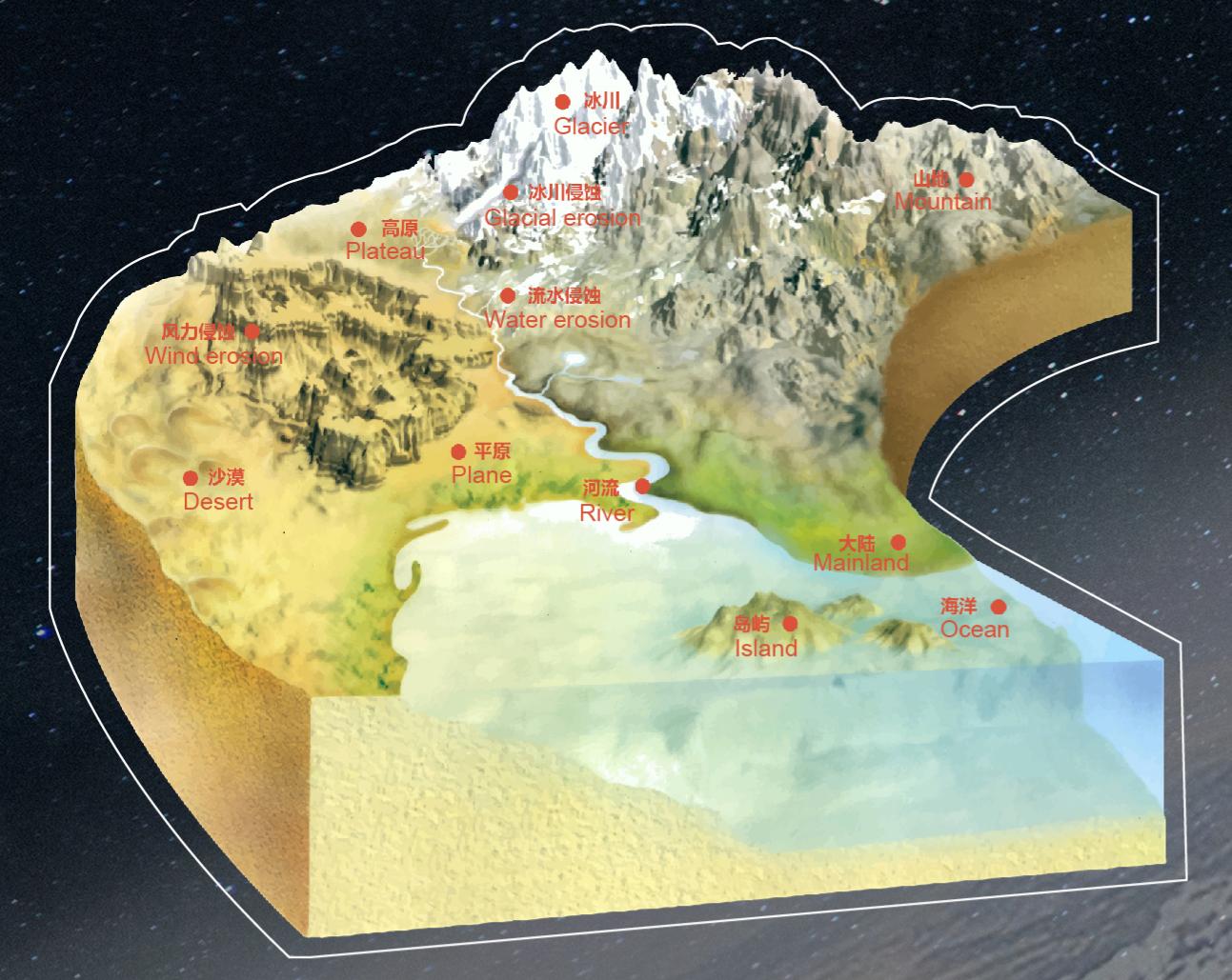
Exogenic geological process can destroy and flatten the bulge created by interior force, forming many strange landscapes usually.
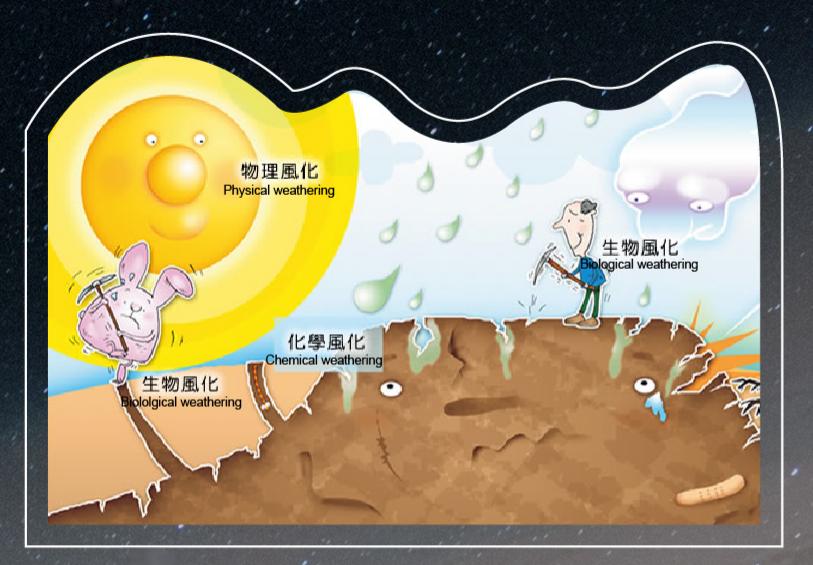
Weathering
Weathering refers to the whole process of forming loose deposits in situ while producing physical and chemical changes during the contact between hard rocks, minerals and the atmosphere, water and living organisms on the surface or near the surface. According to the factors and properties of weathering, it can be divided into three types, which is physical weathering, chemical weathering, and biological weathering.
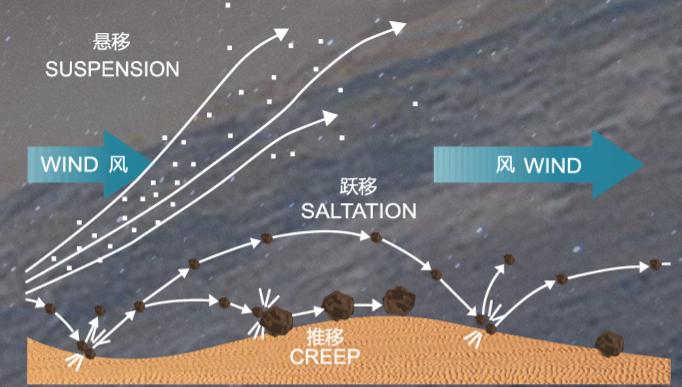
Transportation
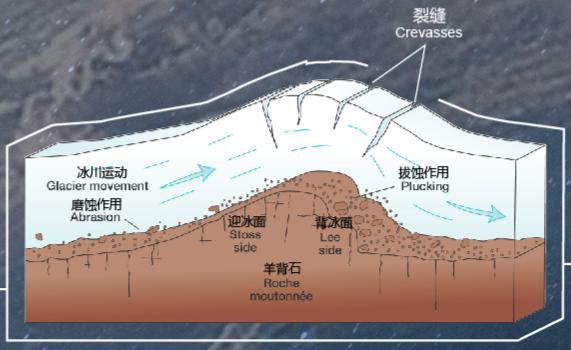
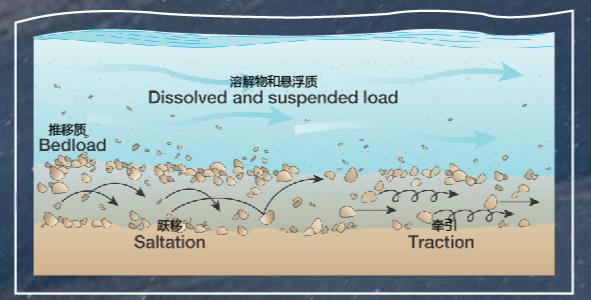
Transportation refers to the process of moving products of weathering such as clastic rock and soluble materials to elsewhere by exterior force on the surface or near the surface, which an important way of how natural world shaping surface of the Earth. Exterior force includes current, wave, tidal and ocean current, glaciers, groundwater, wind, biological effects, and so on.
 |
 |
 |
Sedimentation
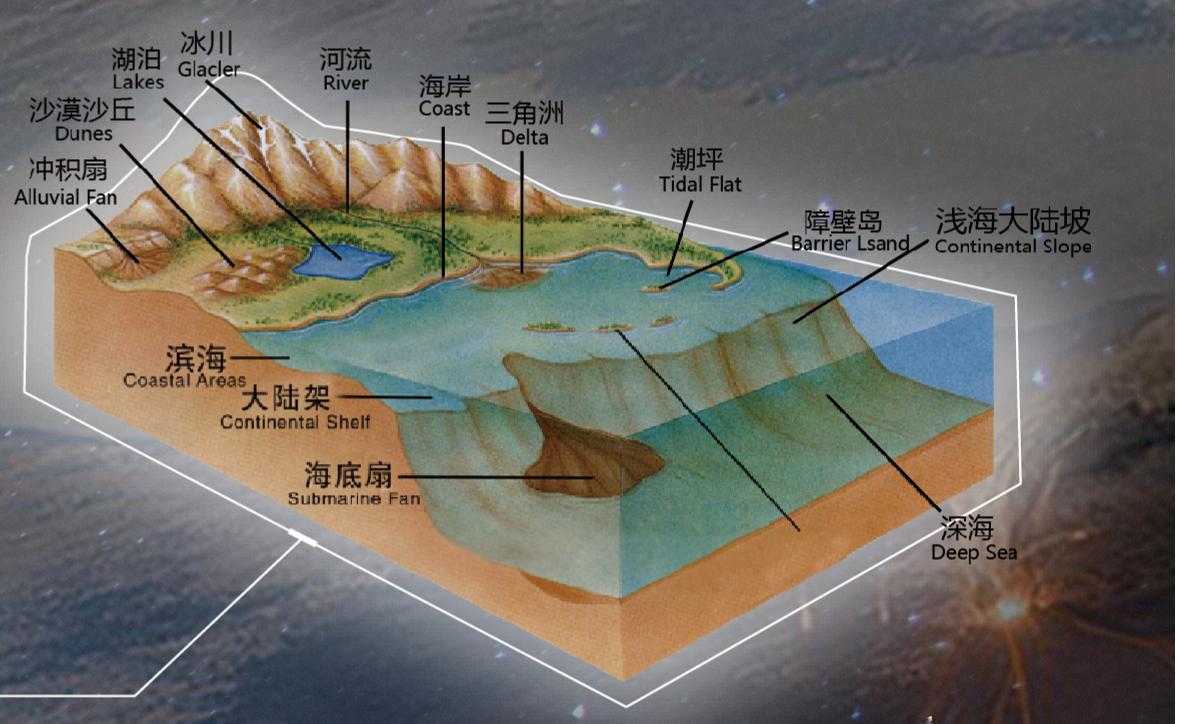
Sedimentation refers to the process of sedimentation and accumulation due to changes in conditions after substances transported by a moving medium reach a suitable location. According to the sedimentary environment, it can be divided into two types: continental sedimentation and marine sedimentation; according to the sedimentation mode, it can be divided into mechanical sedimentation, chemical sedimentation and material sedimentation.
Consolidation diagenesis
It is a type of external force in geological progress. The weathered erosion materials of rocks are transported and deposited to form sediments. With certain physical, chemical and biochemical effects, the sediments are consolidated and hardened.