
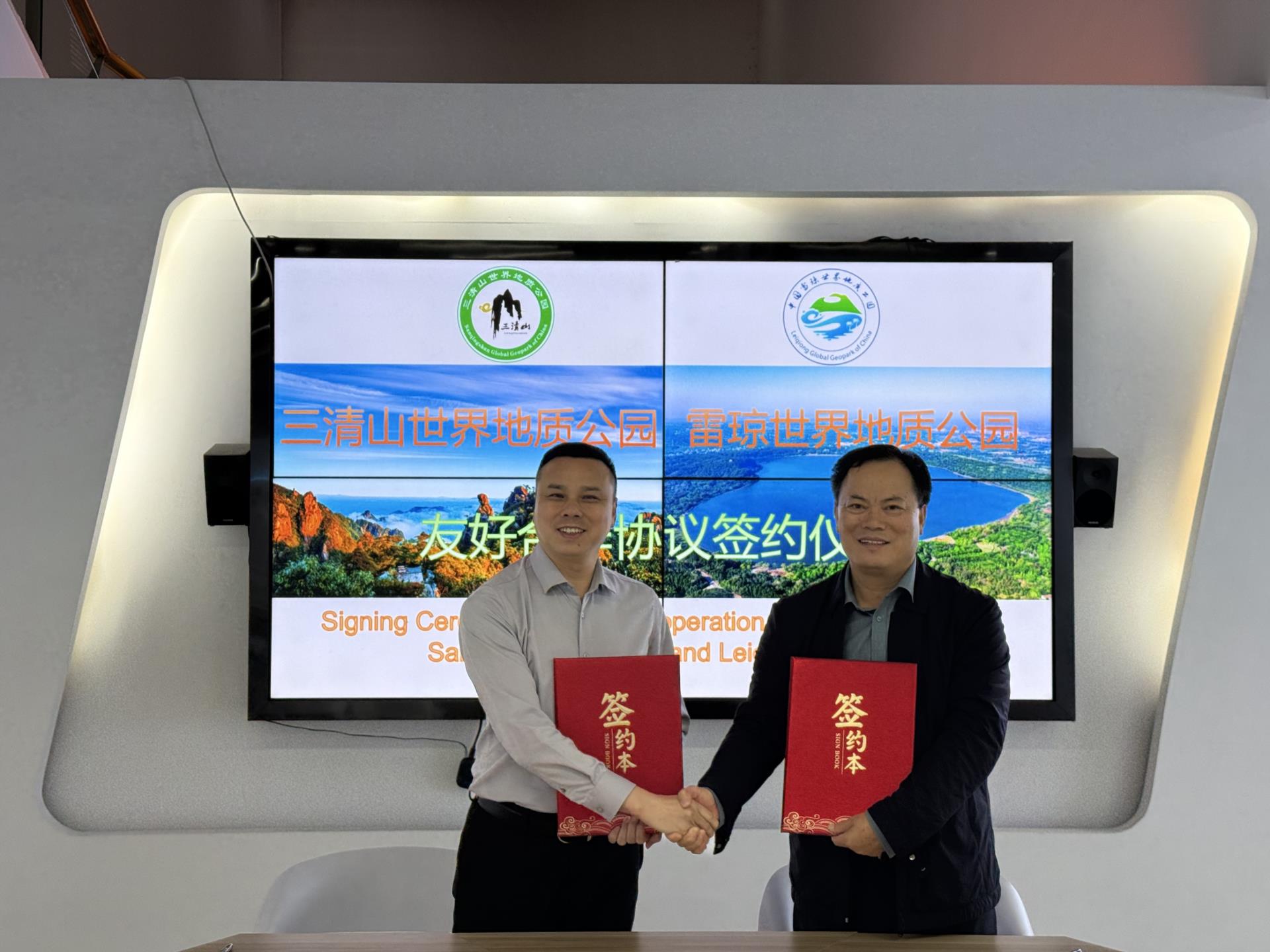
From April 16 to 17, 2026, an inspection delegation from Leiqiong UNESCO Global Geopark visited Sanqingshan UNESCO Global Geopark upon invitation. They carried out field investigations and professional exchanges, signed a Sister Geopark Agreement, and established a long-term cooperative relationship.
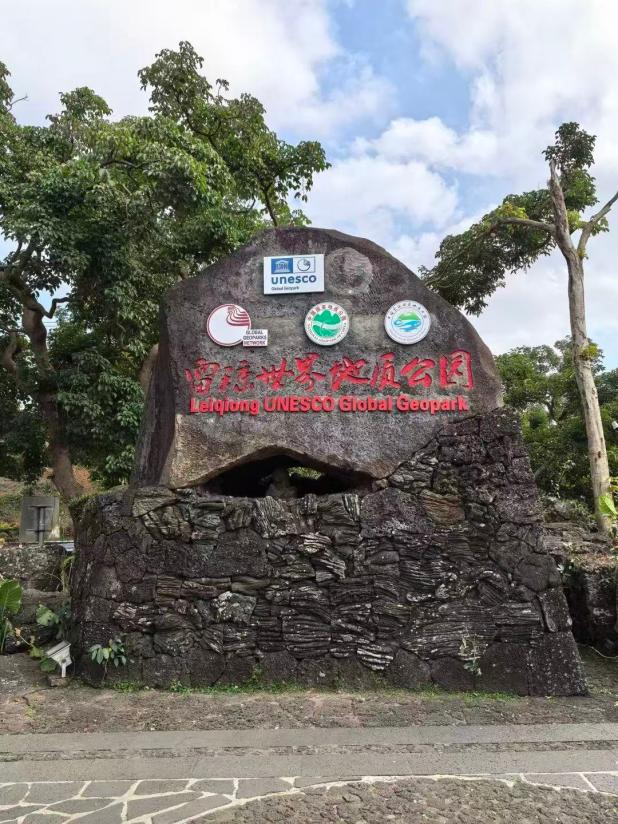
Leiqiong UNESCO Global Geopark is located at the southern tip of China, spanning the Leizhou Peninsula (Lei) in Zhanjiang City, Guangdong Province and Haikou City (Qiong), Hainan Province. It consists of the Zhanjiang Zone, Haikou Zone and the Qiongzhou Strait, covering an area of 3,050 square kilometers.
The geopark lies at the junction of the Pacific Plate, Indian Plate and Eurasian Plate. In ancient times, Leizhou and Hainan were connected as a single landmass. Starting around 30 million years ago, east-west fault subsidence occurred, seawater flooded the rift valley to form the Qiongzhou Strait, separating the Leizhou Peninsula from Hainan Island.
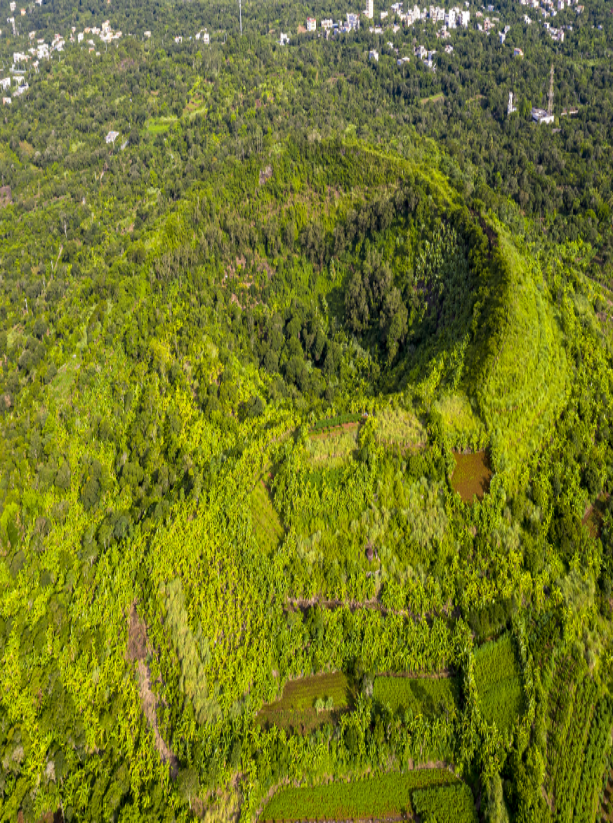
Volcanic activity was frequent across the region. Eleven phases of volcanic eruptions formed the extensive basalt platform and abundant volcanic landforms in the central and southern parts. Along the coastline, volcanic rocks shaped a series of marine erosion and marine accumulation landforms under seawater action.
The geopark is famous for the Quaternary volcanic belt represented by Haikou’s Ma’an Ridge. Particularly distinctive are the maar volcanoes, formed by interactions between hot magma and water; some craters are filled with water to form lakes. The representative Lake Yanqi Maar Lake boasts great scientific value as an ideal site for researching global palaeoclimate and palaeoenvironmental changes.
Extensive and diverse volcanic rocks create the geopark’s unique geological and geographical setting. Combined with the climate of the transition zone from tropical to subtropical zones, this nurtures outstanding ecosystems and wildlife. The geopark serves as a vital transit “stopover” for migratory birds travelling between Southeast Asia and the Indian Subcontinent.
It hosts multiple vegetation types including tropical rainforest and mangroves, with more than 1,200 plant species, over 400 fish species and dozens of coral species.
As early as about 10,000 years ago, ancient people settled and thrived here. Over thousands of years, a distinctive volcanic culture has taken shape. Locals built houses with volcanic basalt, cultivated colourful volcanic farmlands on weathered laterite derived from volcanic rock, and carved basalt into stone dogs worshipped as volcanic totems.
With vibrant pastoral scenery of red volcanic land and the inclusive charm of blue ocean, Leiqiong UNESCO Global Geopark warmly welcomes you!
Learn More Leiqiong UNESCO Global Geopark

