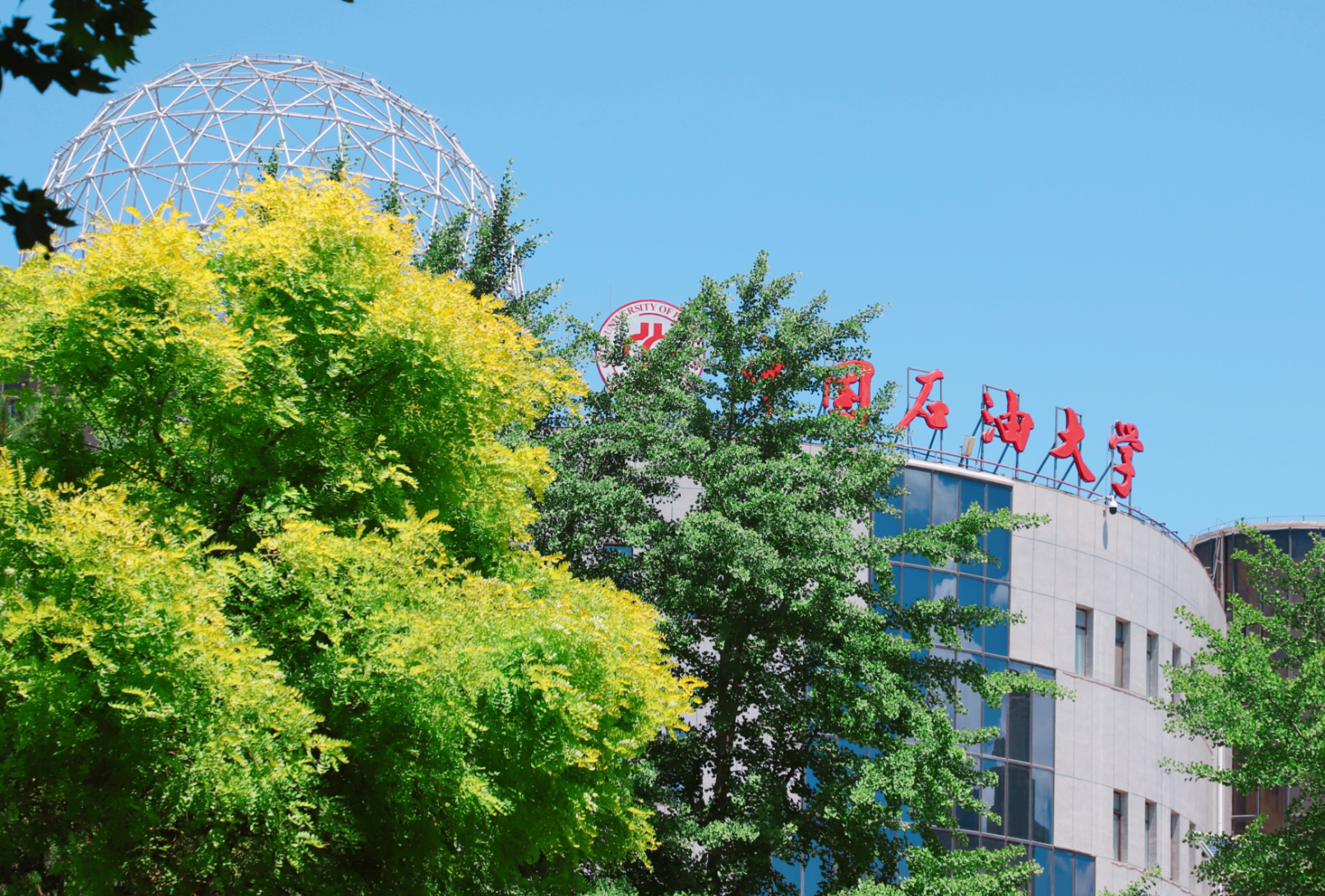
The China University of Petroleum (Beijing) is a national key university directly under the Ministry of Education, distinguished by its distinctive petroleum characteristics, with engineering as the dominant discipline and coordinated development of multiple disciplines. It is among the first group of universities included in the national "211 Project" and the first batch of "World First-class Discipline Construction Universities". It is a member of the Beijing Hi-Tech University Alliance and the World Energy University Alliance. The university has been selected into the Innovation Platform for Disciplines of the "985 Project", the "111 Plan", the Excellent Engineer Education and Training Program, the National Construction Program for High-level University Students Studying Abroad, the New Engineering Research and Practice Program, and the Institution Accepting International Students Under Chinese Government Scholarships.
Founded in 1953 as Beijing Petroleum Institute, the university was designated as a national key university in 1960. In 1969, it was relocated to Dongying, Shandong Province, where the Shengli Oilfield is located, and renamed East China Petroleum Institute. In 1988, it was renamed the University of Petroleum, consisting of the University of Petroleum (Beijing) and the University of Petroleum (East China). In February 2000, the university was transferred from the China National Petroleum Corporation to the administration of the Ministry of Education, and the two campuses operated relatively independently. In January 2005, it was officially renamed China University of Petroleum (Beijing).
The China University of Petroleum (Beijing) has 5 national key disciplines, including Mineral Exploration and Prospecting, Oil and Gas Well Engineering, Oil and Gas Field Development Engineering, Chemical Technology, and Oil and Gas Storage and Transportation Engineering, as well as 2 national key (cultivating) disciplines: Geodetection and Information Technology, and Industrial Catalysis. Nine discipline areas, namely Engineering, Chemistry, Materials Science, Geosciences, Computer Science, Environment and Ecology, General Social Sciences, Mathematics, and Physics, rank among the top 1% in the global ESI rankings, among which Engineering, Chemistry, Geosciences, and Materials Science are among the top 1‰ globally. Two first-level disciplines, Geological Resources and Geological Engineering, and Oil and Gas Engineering, have been selected into the national "Double First-Class" construction discipline list.
Website: China University of Petroleum (Beijing)